A New Home for Schek BMW Enduros
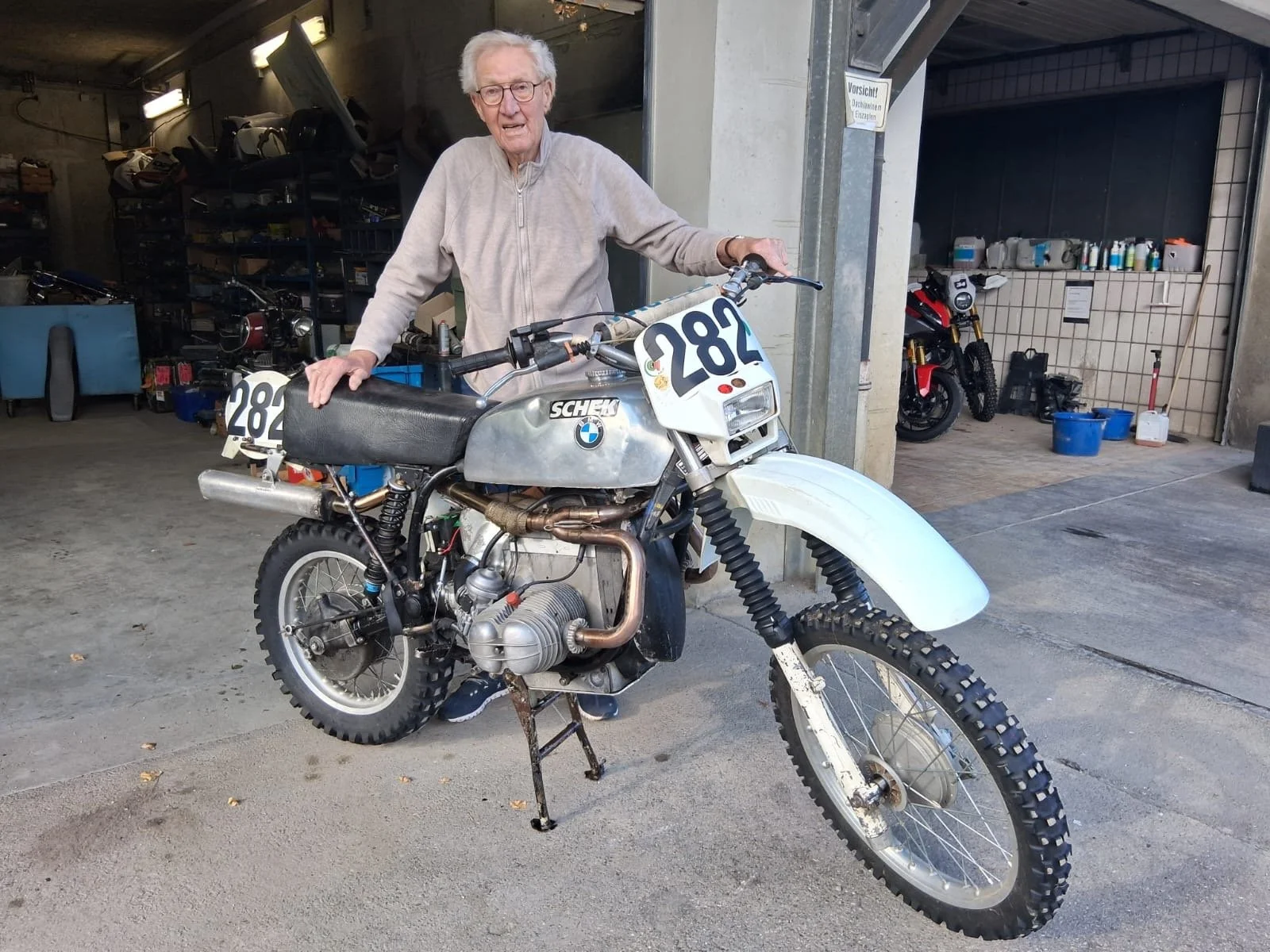
Herbert schek with #11 of 17 of his “production” BMW Gs800 creations, in germany.
The MAX BMW Classic Enduro Collection is Growing
If you've spent any time here, you've already met Herbert Schek. He's the rider who brought a BMW to the 1973 ISDT at Dalton. His 1973 /5, the one we affectionately call “Herbie”, still lives with us and goes to work in the woods on the weekends.
We’ve recently received two more of Herbert’s classic enduro creations: a Schek BMW GS 800 and a Paris-Dakar R80 GS that was the platform for the Dakar Rally bikes in the late 80s and early 90s. I hesitate to call these three bikes a collection, because the word suggests that these bikes are kept behind glass, posed, to be admired. And while each of these bikes has historical value, we’ve brought them into our shop not to be preserved, but to be ridden and studied.
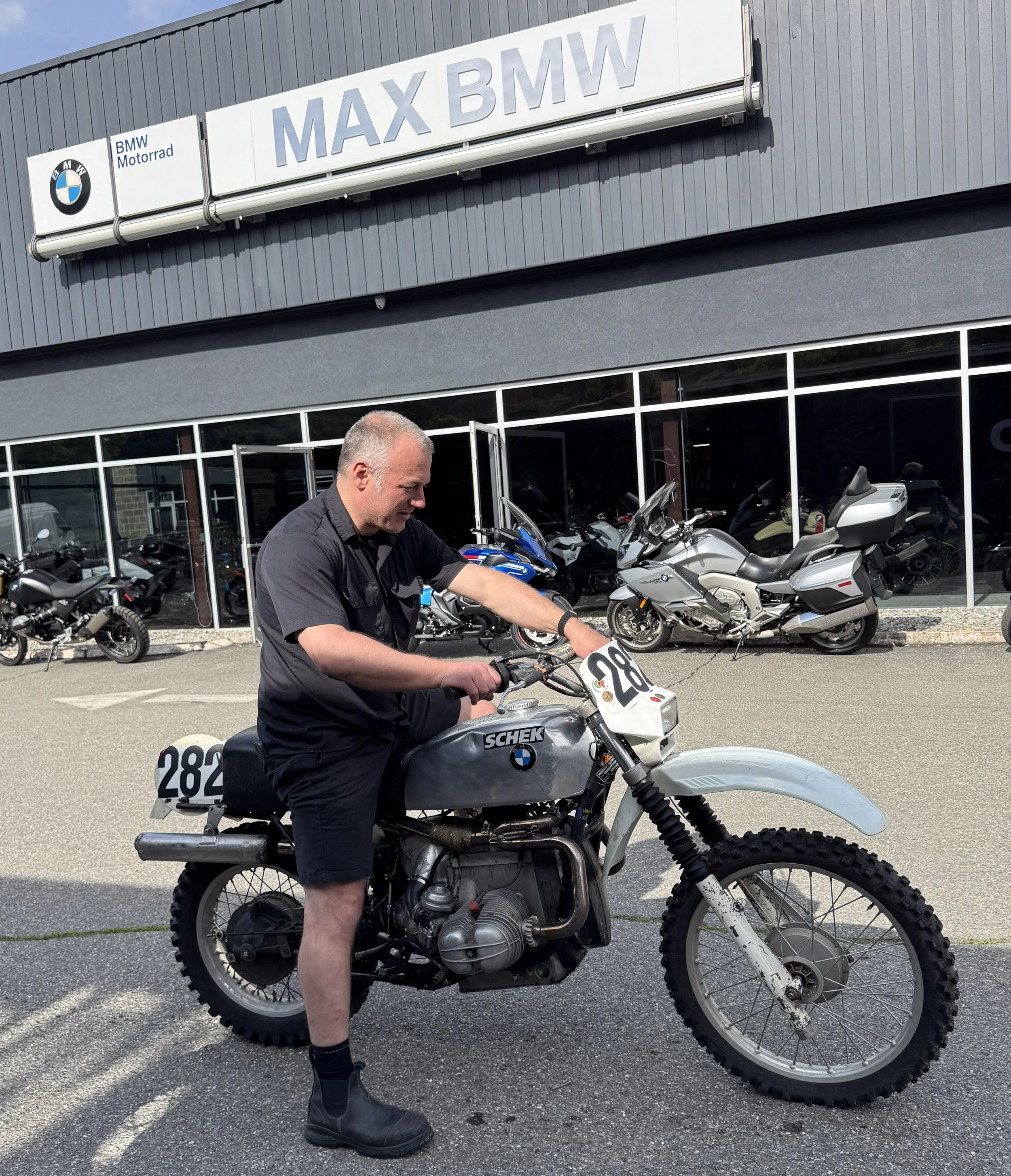
MAX WITH The just-arrived SCHEK BMW GS800 #11 at max bmw motorcycles in New Milford, CT, USA
I love these bikes because they’re honest. A 70’s boxer enduro is about as simple as a BMW motorcycle gets. Air-cooled twin, a frame, two wheels, and not much you can't reach with a normal set of tools. Light, simple and durable. Which makes sense when you realize that these bikes were made for intense multi-day competition - the ISDT, the European Off-Road Championship, and the Paris-Dakar Rally.
We’re taking lessons from the history of these bikes and we’re on the road to building new editions of these classics, using parts that are largely already out there and a few special frame and suspension parts that we have developed in-house. (If you’re interested in building one, let me know.)
You’ve already met “Herbie”, so let me introduce you to the new arrivals.
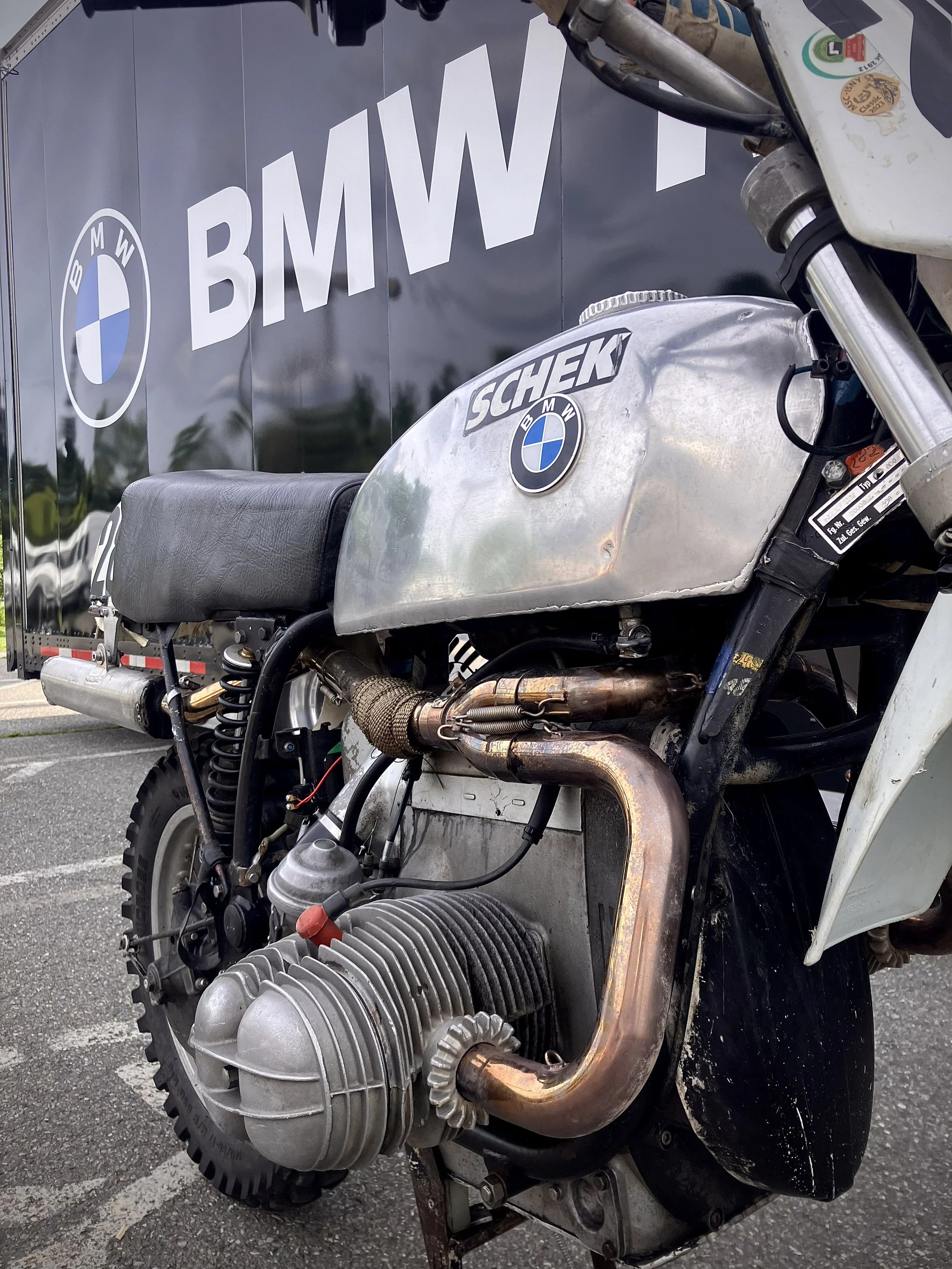
The first is a Schek BMW GS800, number 11 out of only 17 made. How this bike came to be is a crazy story.
In the mid-1970s, Schek was a legendary German off-road champion with a fistful of Six Days gold medals and a couple of decades of factory rides behind him. He loved BMWs, but had a persistent complaint: they were too heavy. Schek told BMW's development people the bikes needed to lose serious weight.
BMW told him it couldn't be done.
To which Herbert replied, “Halt mein bier” (or something to that effect.)
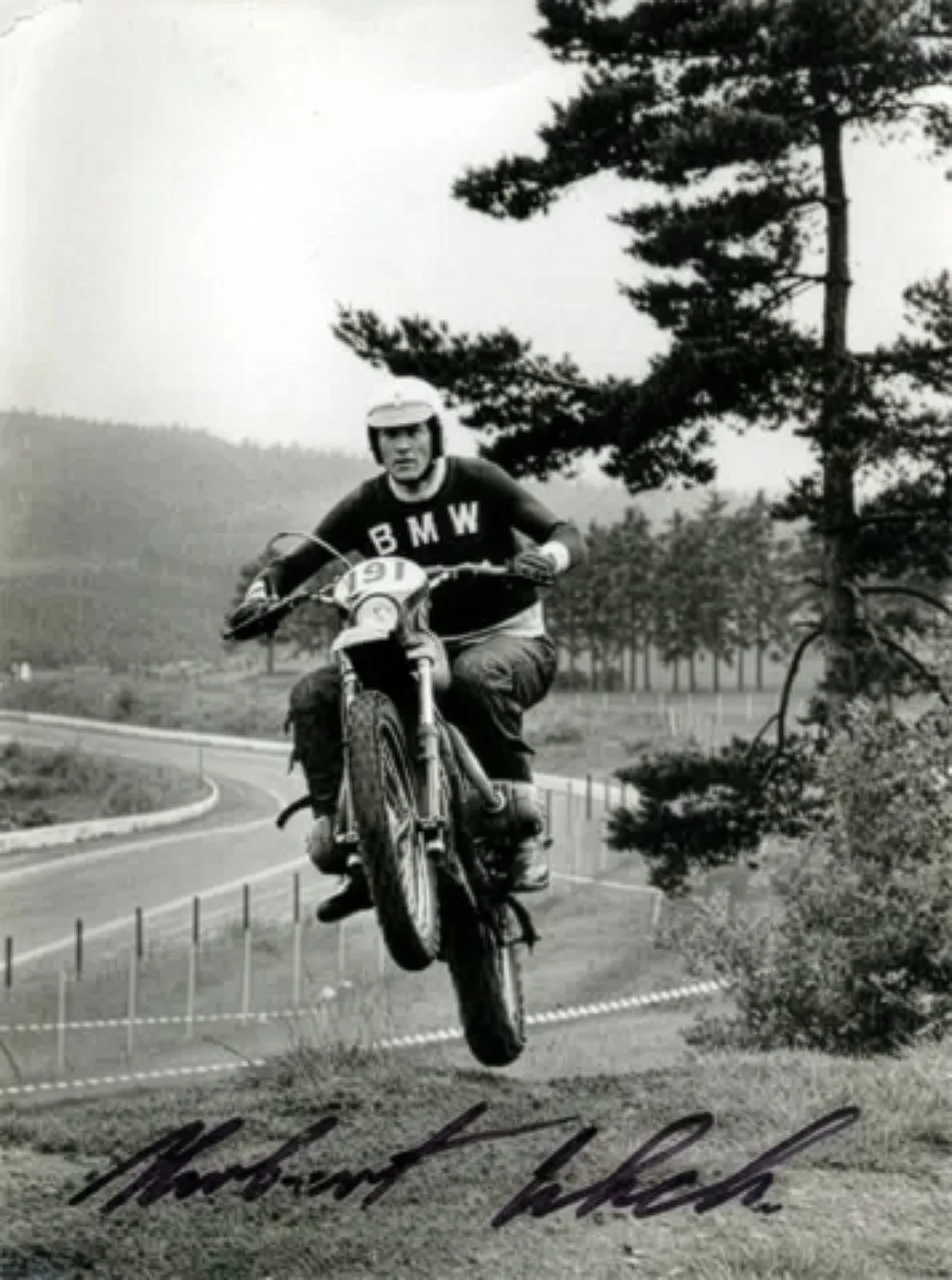
photo from “Herbert Schek, a giant of the german isdt scene” at Speedtrack tales.
Schek went to work on his new concept. He made a lot of the hard parts himself, including magnesium connecting rods and hollow titanium driveshafts, and BMW gave him the remaining materials cut to his spec.
The bike was still in its iterative stages when Germany's sporting authority created a new enduro class for engines over 750cc for the upcoming 1978 season. Wanting to get back into off-road competition to help promote the new production dual-sport R80 GS, BMW signed on to use Schek’s new recipe for the “GS 800”. Equipped with a 799cc engine, 55 horsepower and a dry weight of 128 kilograms, a March 1978 BMW Motorrad press release announced that ten of these machines would be built and sold before the season started.
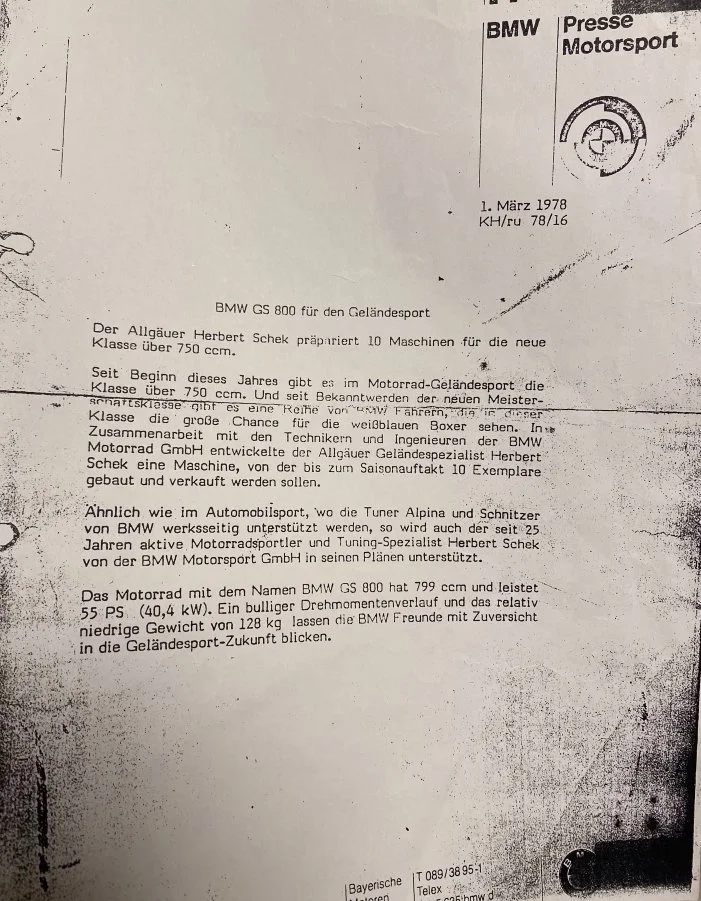
A copy of the press release for the BMW GS 800
However, when it was time to enter the GS 800 into competition, the team hit a wall. Schek’s machines were different enough from a stock BMW that they weren't covered by BMW's type approval. In the eyes of the German authorities, they weren't BMWs. To make them legal for the new class, somebody had to homologate them.
And that somebody was Herbert.
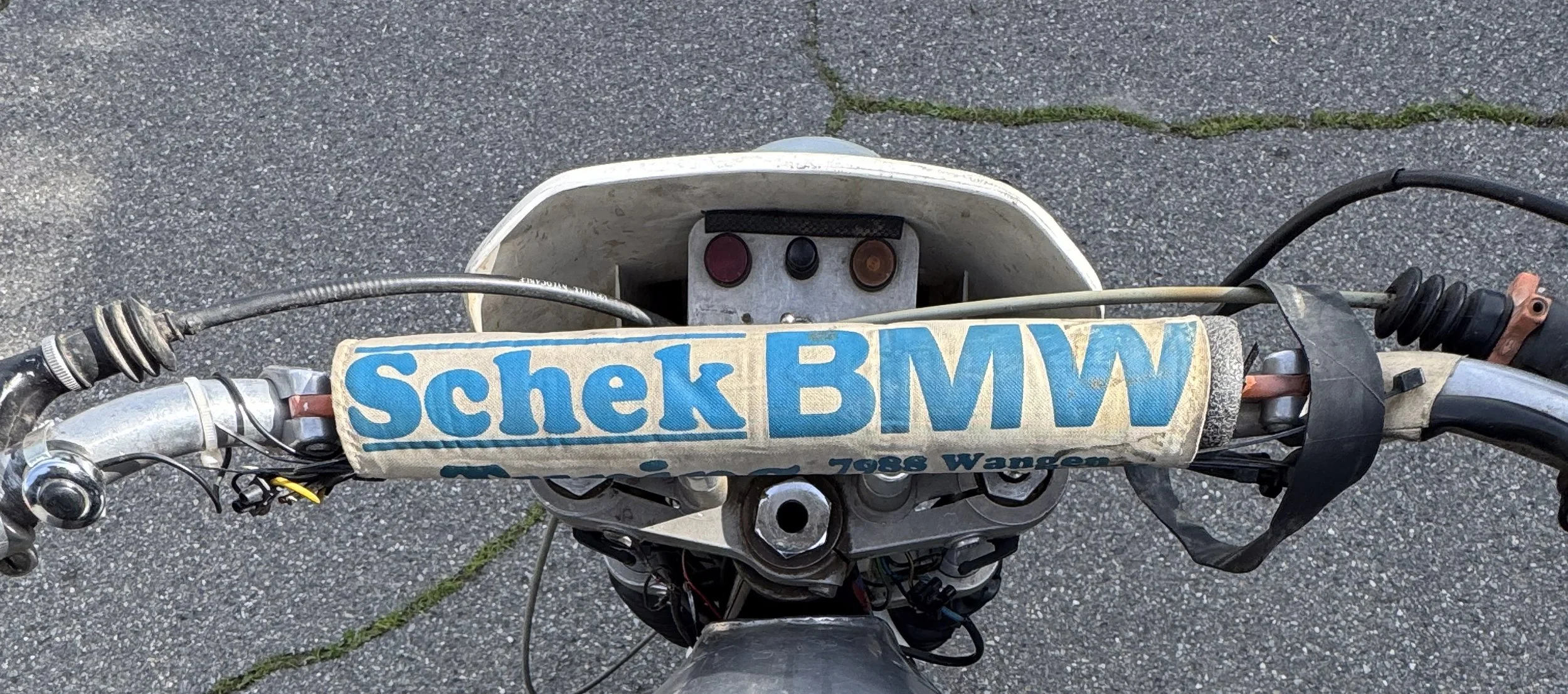
Schek had ten name badges pressed, bolted them to ten motorcycles, and presented the “Schek BMW GS 800” for official inspection. They were approved, and they worked. Schek won the European off-road championship on one in 1980.
It turned out plenty of people wanted a big, light, fast enduro bike, and the orders kept coming. By most accounts Schek built seventeen in all, some with engines that grew past 1,000cc. The bike that we now have, with the 282 number plate, is serial number 11 of the production run.
Herbert’s engineering didn't stop at the finish line of the early eighties. He went on to prep the BMWs that Hubert Auriol and Gaston Rahier rode to back-to-back Paris-Dakar wins.
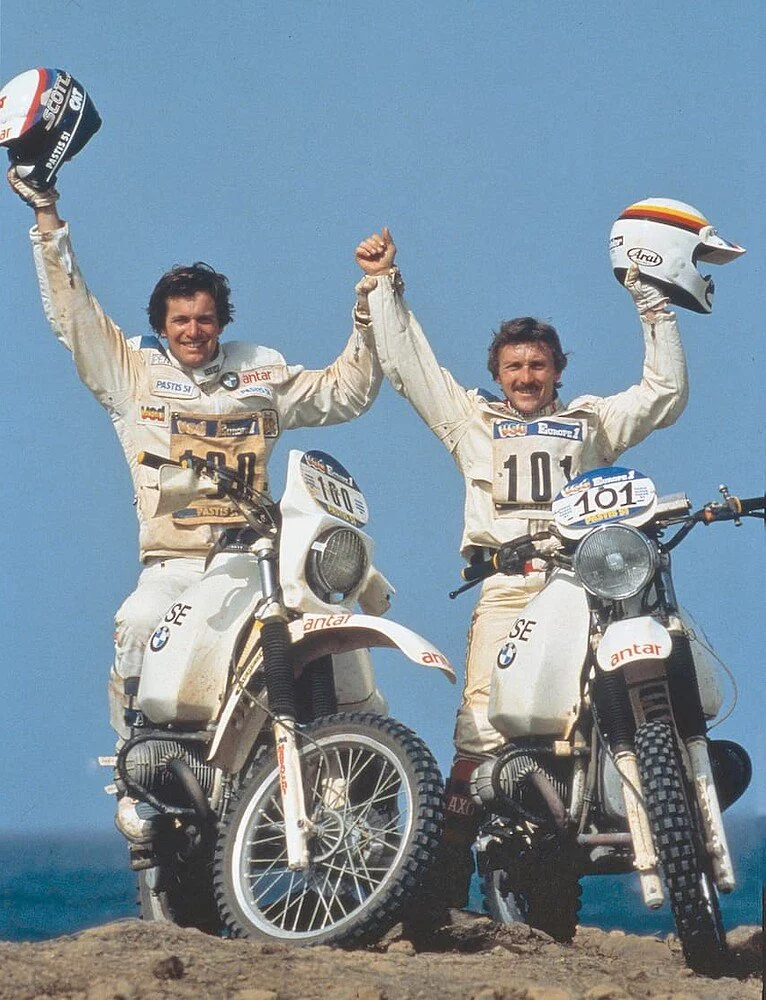
Dakar rally legends Auriol and rahier on their schek-prepped bmws
Herbert used this experience to build the third bike that now sits in our shop. The R80 GS Paris Dakar was the platform that his daughter Patricia rode to victory in the women’s division of the 1990 and 1991 editions of the Dakar rally.
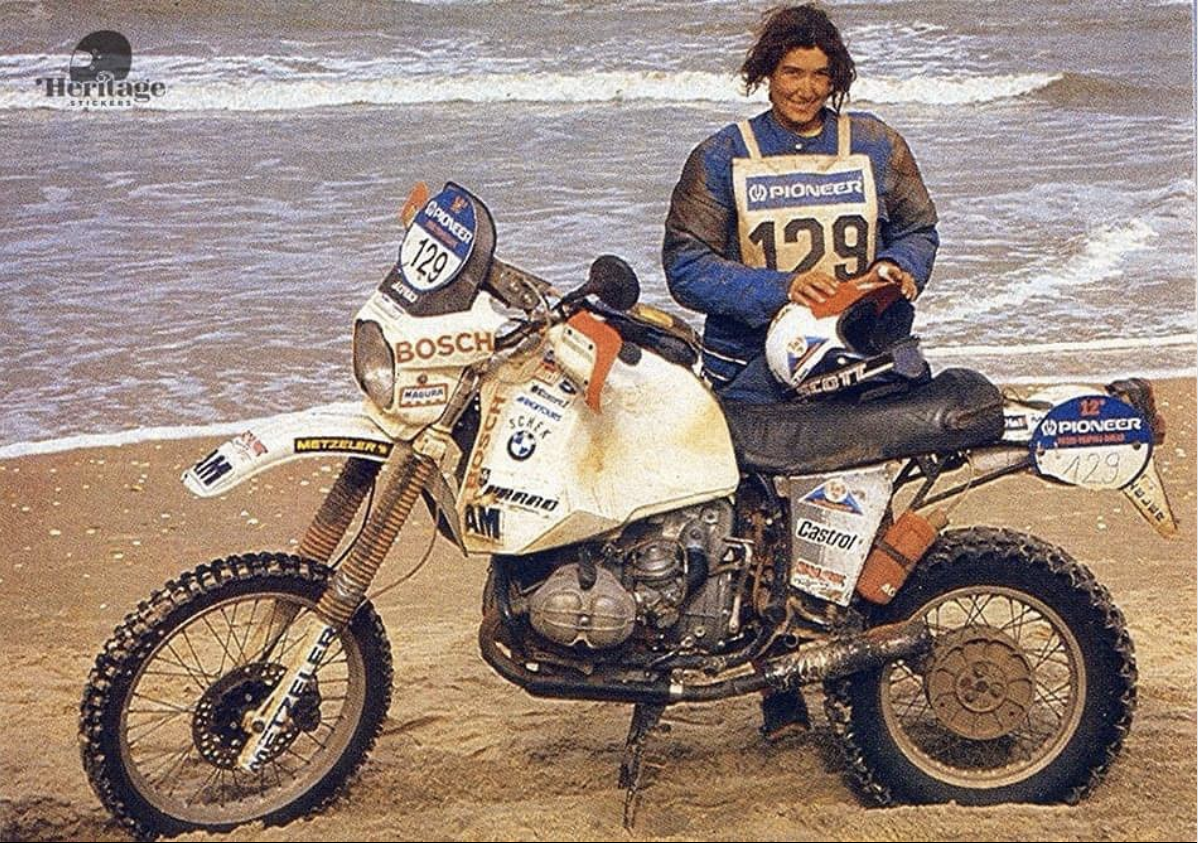
Patricia schek at the 1990 dakar Rally where she won the women’s trophy
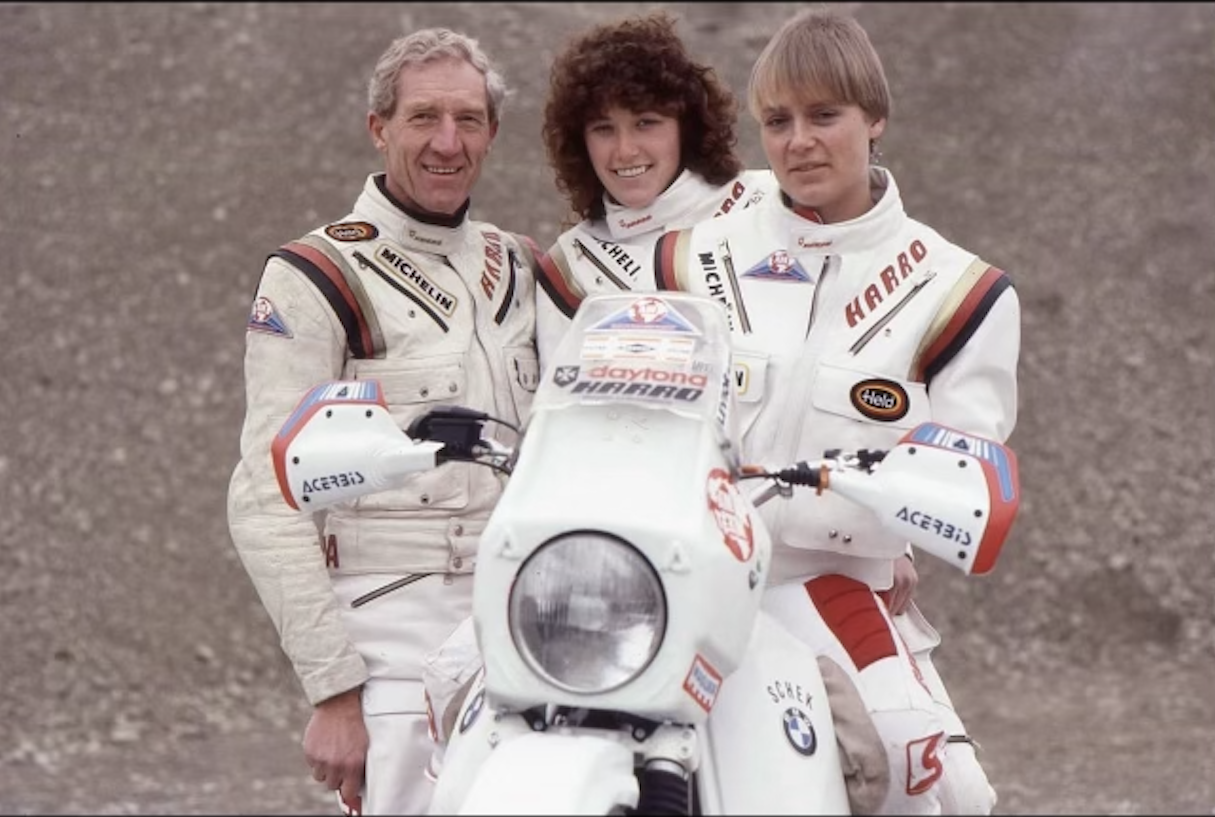
Herbert & Patricia schek and jutta Kleinschmidt CIRCA 1992
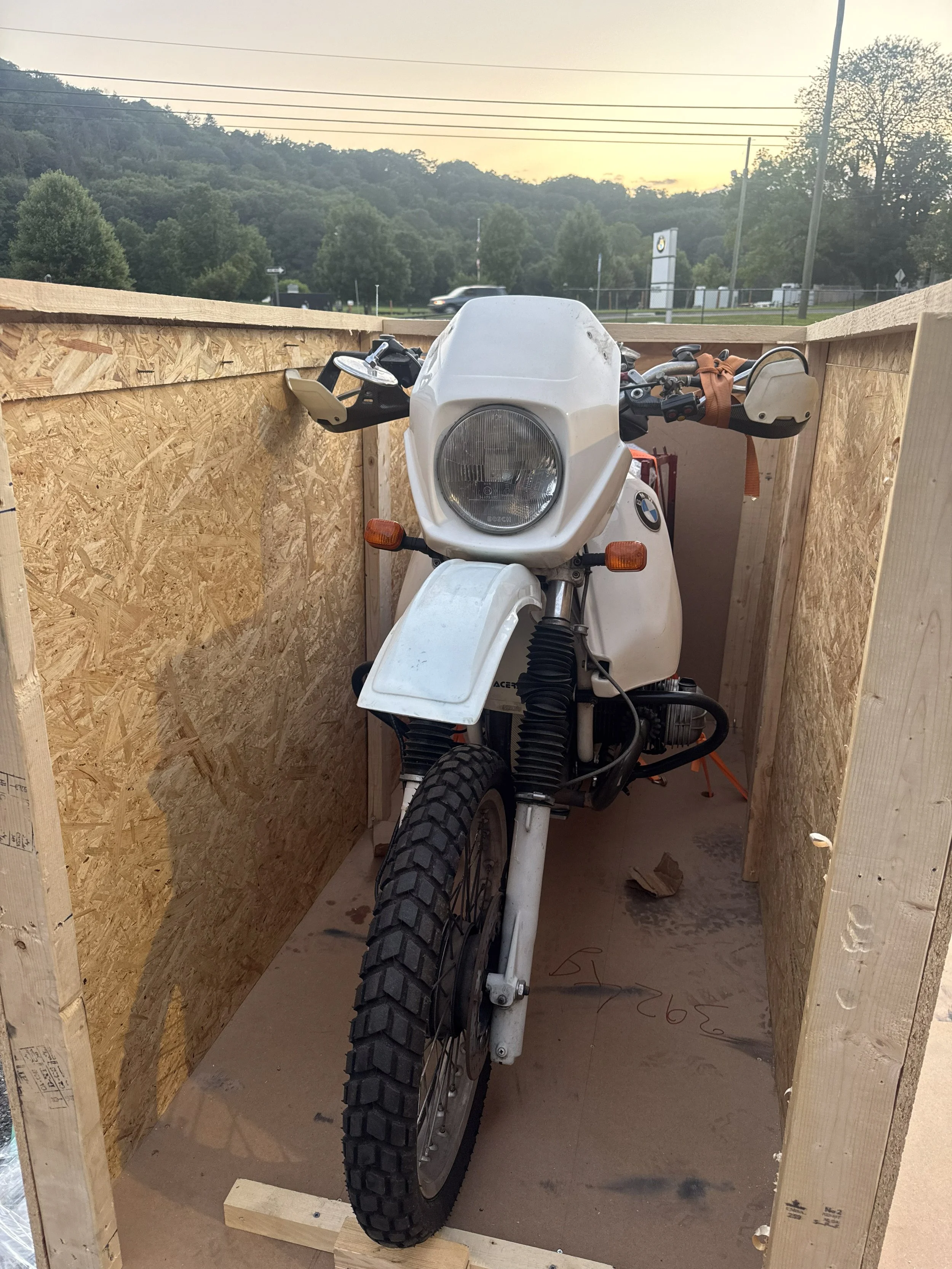
The SCHEK R80 GS has seen many parts of the world in its lifetime and is now is getting to know Connecticut.
This is not Patricia’s actual race bike, but it is one of only 17 built to this spec. With 50 mm Marzocchi front forks, an extended rear swing arm, Acerbis extended range tank and custom rear sub frame, this bike is as capable as it is beautiful. We lightened the crank, and gave it more power, upgrading the balanced engine to 1043 cc.
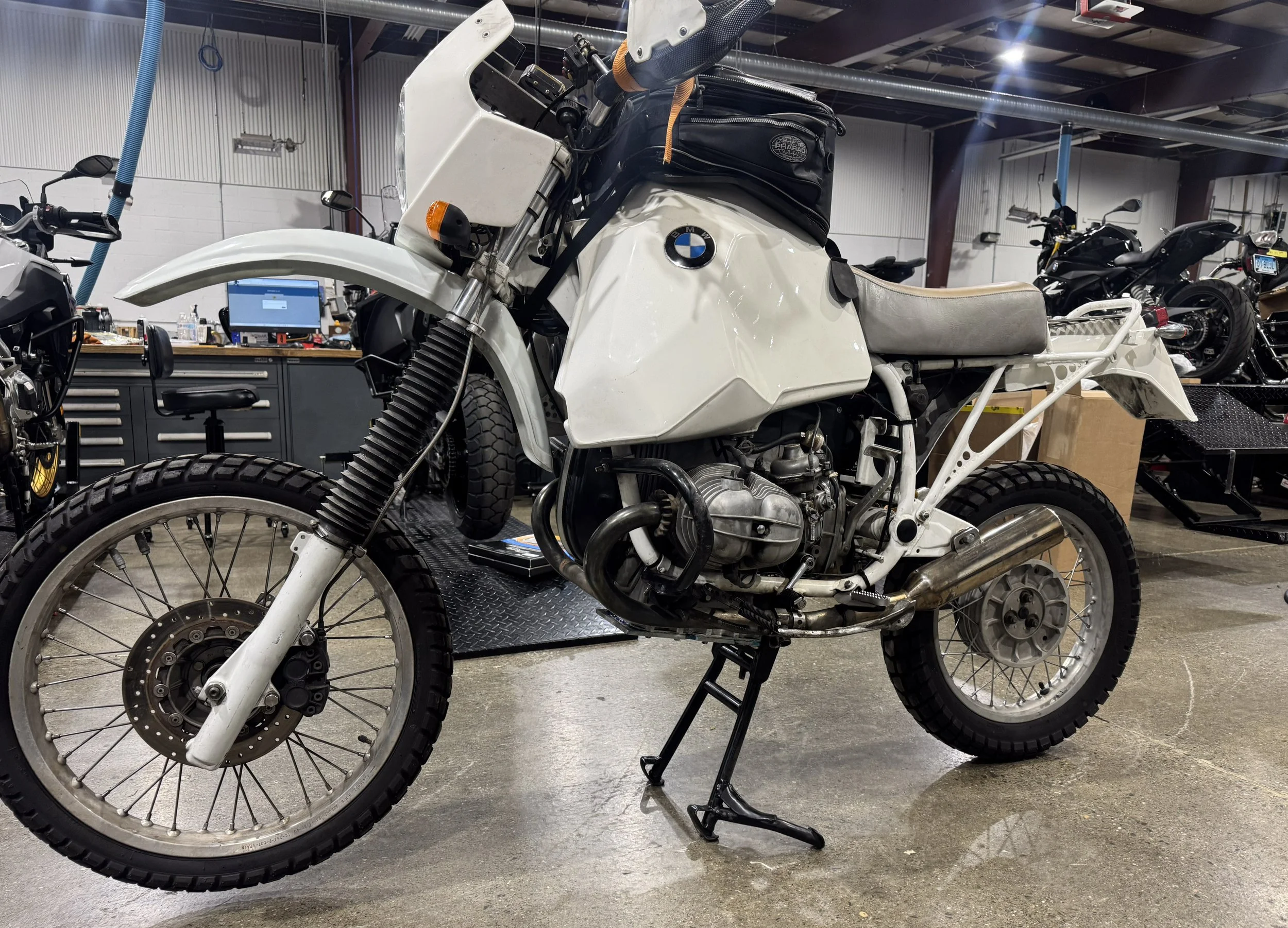
The bike, in its streetable form, has a great stance
Herbert Schek proved something fifty years ago that still holds. A great vintage enduro doesn't need to be exotic to be special. It needs to be light, simple, and built to be ridden hard and fixed easily. That's exactly why bikes like these are still a joy to work on, and still worth getting out into the woods.
Come by the ship to say hello to these beauties. You might just feel inspired to have us build one for you.